"What do you mean you've hurt 'your' knee, it's Liverpool's knee" - Bill Shankly.
Showing posts with label Javier Mascherano. Show all posts

Wednesday, February 2, 2011

My Favourite Footballer… Javier Mascherano

January 20, 2011
By Joshua Askew

Recently I went back and read through my post on Michael Owen for The Equaliser’s My Favourite Footballer series. To save you from reading it, the post can best be summed up as such: Owen was my favourite footballer as a child and a large part of why I’m into football now, but I’m not overly fond of him now, meaning he isn’t really my favourite footballer.

Which begs the question: who is then?

My first thought was smiley bundle of loveliness Cafu – a player so inherently likeable that I was amazed no one had written about him. Nevertheless, he is not my favourite footballer.

I realised that my affections, like pretty much anyone’s, are easily split into categories. There are plenty of players who I like, very much in fact, by the virtue of being really really good. They are not my favourites. Being brilliant isn’t good enough, and might well be working against them. To me, the likes of Xavi or Leo Messi are like that friend you have where you like them, they’re a really nice person after all, but when you’re left alone with them there’s long periods of awkward silence.

To get into the inner circle, you just need to be funny. The kind of person who might, say, repeatedly hit an eleven year-old girl in the head with a locker door “by accident”, backhand someone who’s hitting on them or throw metal sporting equipment at an innocent, if annoying, hanger on. This is pretty much standard affair for everyone – you act this way (although I’d imagine most of you are less sociopathic than my example) around your best friends because you trust them and are comfortable around them, which makes applying this logic to footballers bizarre. I don’t know them, so I’m looking for glimpses of this wryness in them.

Cafu, for instance, is a great guy and arguably the best right-back of all-time, but the best thing about him was that, at 38, he was physically embarrassing players twenty years his junior. It was impossible not to match his cheeky smile when watch watching him storm down the line for the eightieth time past the knackered 20 year-old he’s up against.

The best of all, though, is Javier Mascherano: a manipulative, sneaky, little monster. Mascherano doesn’t make me smile like Cafu does, he makes me smirk.

He’s the type of player who I would imagine is easy to hate if on the opposing team. What Mascherano lacks in the dribbling of Messi or the passing of Xavi, he makes up for with his sheer cunning – what Italians call furbizia. Furbizia isn’t about breaking the rules, it’s about exploiting them. A master of the niggling foul, Mascherano knows when he can’t get the ball and makes a very minor foul so the team can reshape, but it’s unreasonable to book him.

Or the way he will spin his body when he sees someone coming to draw a foul, twisting into the foetal position upon contact, hand on ankle, often spending a good time resting on his forehead before lifting himself to his feet. With the opposition players whinging at the ref and there usually some teammates between him and the remainder, he gingerly gets up and limps for a few steps, a painful sneer across his face, then glances around and that sneer flickers from his faux pain to that little smirk, a little glint in the eye.

This isn’t to say he’s not talented – he clearly is. As far as I’m concerned, Mascherano’s the best defensive midfielder in the world – his tackling ability is second-to-none and, although his rabid running veils it, he’s positionally perfect. His importance was underlined in the 2007 Champions League final, where he was given the task of nullifying Kaka. The man who had torn apart Liverpool two years before was marked completely out of the game – there’s a tackle by Mascherano where I still can’t work out how he got the ball – until the Argentinian was taken off for Peter Crouch, leaving Kaka free to set up Pippo Inzaghi’s second goal.

Neither is he as limited a player as often made out, but when playing next to someone who is, he too would appear to be. For several seasons, he was Xabi Alonso’s legs in the Liverpool midfield, mercilessly harassing the opposition because the Basque playmaker couldn’t. Then, when he won the ball back, he would give it to Alonso, not because he couldn’t use it himself, but because Alonso was better. For Argentina, he is calmer and allowed to be a more metronomic holding player, the ball never gets a yard away from him in possession and his perfectly-weighted diagonal passes would make most players envious. There were reasons beyond personal issues as to why Diego Maradona chose to leave Esteban Cambiasso in Milan for the World Cup.

There’s no excuse for his shooting though, but when he does pull it off, it’s something special. Manically running towards the supporters, clearly shouting “fuck off”, for example.

Off the pitch, he appears to a nice guy – a quiet and unassuming family man. Regardless, it’s that comical sneer that always gets me.

Javier Mascherano: The Best Player You Can’t Really Afford To Play

December 8, 2010
By Rob McDonald

It’s staggering that “El Jefecito” (the little chief) is only 26 years old. In his career he’s a two time Olympic Gold winner, a champion in Argentina and Brazil and the captain of the Argentine national side – a team he made his debut for before his club. But that’s only telling half of the story: Javier Mascherano’s also been relegated to the West Ham reserves, his constant usage at Liverpool is seen as one of the reasons that Liverpool fell from grace and he now can’t get into the Barcelona starting eleven.

It was through his burgeoning international career that he garnered many of his early plaudits, starring in the U-17 Championships in 2001 and the Olympics in 2004. However, although he went from strength to strength for Argentina and got his first international cap in a friendly against Uruguay in July 2003, he couldn’t break into the River Plate first team, where captain Leanardo Astrada was ahead of him in the pecking order.

It was the 2003-2004 season where Mascherano made 20 appearances and began to become a regular fixture in the River team, a season in which River won the Clausura and reached the Copa Libertadores semi-final. And it was also this season that Mascherano started attracting interest from several La Liga clubs, including Real Madrid and Deportivo La Coruna, although nobody was willing to meet River’s valuation. In the following season Mascherano became even more integral to the River side but the club struggled throughout the season.

After the 2005 Confederations Cup, Mascherano joined Brazilian side Corinthians for $15m, but his first season was cut short following a fracture in his foot that ruled him out for 6 month. Mascherano watched from the sidelines as Corinthians won the Brazilian Serie A championship, captained by a player he’d become synonymous with, Carlos Tevez.

Mascherano returned to full fitness for the round of 16 of the Copa Libertadores, where his former side River Plate knocked Corinthians out. Coupled with this, things weren’t going well on the domestic front: Corinthians battling relegation before the season was interrupted for the 2006 World Cup in Germany. Mascherano’s performances in the World Cup attracted suitors all across Europe but he stated he wanted to return to Corinthians to help them fight relegation and wanted to postpone any transfer until the January 2007 European transfer window. However, hours before the window closed, Mascherano and club-mate Carlos Tevez joined English side West Ham United.

The circumstances regarding this bizarre transfer have never fully revealed, with many rumours at the time saying that the only reason Mascherano and Tevez signed for West Ham was due to their agents, Media Sport Investments, having an interest in buying West Ham.

Speculation of various different stipulations in Mascherano’s contract dogged his time in London, where he only appeared 5 times for West Ham. In his 5 months at the club, he had gone from one of the hottest properties in the world to turning out for the West Ham United reserves.

Another last minute transfer deal in the following transfer window saw Mascherano signing on loan at Liverpool, where he would eventually sign on a permanent basis and became a regular fixture for 3 years. In this time he would solidify his reputation as one of the best defensive midfielders in the world and become captain of his country before moving to Barcelona in the summer of 2010 for a reputed £21m, with personal reasons being cited as why he wanted to leave the club.

Since signing for Barcelona, he’s struggled to make the impact that was expected, with him being mainly consigned to the bench. The signing seemed a strange one at the time for Barcelona as their first choice, Sergio Busquets, was coming off a very successful World Cup and Mascherano wasn’t likely to play ahead of Xavi or Andres Iniesta in the midfield trident Barcelona employ. Where he would fit into the Barcelona side wasn’t apparent – although Mascherano is undoubtedly one of the most successful proponents of destructive football, he can be seen as a very one-dimensional player who doesn’t offer any creativity or attacking intent, which is something that is a tactical staple at Barcelona under Pep Guardiola.

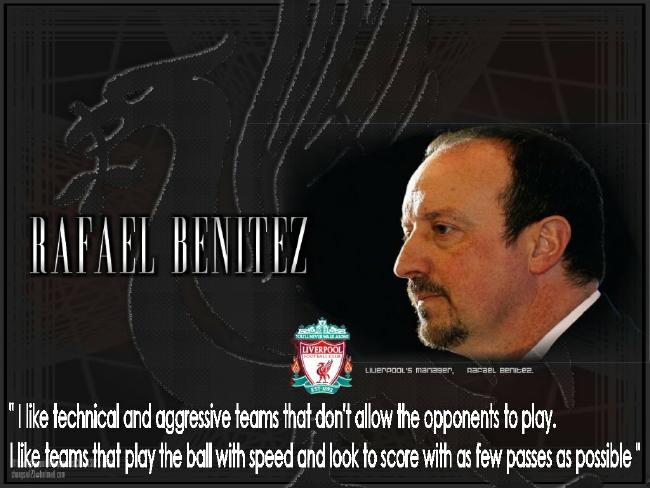
In Rafael Benitez’s much-maligned final year in charge of Liverpool it was his avowed usage of Mascherano and Lucas Leiva that was seen as the primary pitfall. Neither player was ever likely to take on any attacking onus, and although it was primarily Liverpool’s defensive frailties that caused many of their defeats it was Benitez’s insistence on this formation that caused the most unrest amongst the majority of the English punditry.

The reasoning for this insistence is varied and disputed, but Benitez’s staunch belief possibly grew from the 2007 Champions League final, where he took off Mascherano – who had controlled Kaka for entirety of the 80 minutes he was on the field alongside Xabi Alonso – to bring on another attacker in Peter Crouch. This change lead to AC Milan’s second goal as Kaka was left free to pick a pass for Inzaghi. Indeed, Benitez’s belief, generally, is that controlling the game and effectively playing a game of ratios on possession is far more likely to yield results than throwing on more attackers to the detriment of control. One which arguably became completely ingrained into the way he proceeded with Liverpool after the 2007 final and was one which suited the type of football Mascherano plays.

Claude Makelele is seen as, or certainly in England, the archetypal defensive midfielder. Players of this ilk are perhaps more able tactically rather than physically, more able at disrupting play through reading the game and intercepting passes, which Mascherano does have in his game, but not to the same extent. Mascherano is a player who is more about physical stamina and tackling rather than taking up space tactically. To compensate for this he was always coupled with one of Lucas Leiva or Xabi Alonso when at Liverpool, players who were more in this mould and who could cover for Mascherano as he went on his mad dashes to crush opposition players.

As a destructive force Mascherano is second to none, but the problem he has is that his game has developed so that he is likely to leave space in front of the defence and needs somebody alongside him who can fill that space. That is not to say that Mascherano is as mad as a dog and a liability in every game he plays, but he will never be a player who can provide stability and solidity like Alonso or Lucas.

Upon Xabi Alonso’s leaving for Madrid in the summer of 2009 Benitez was faced with the conundrum of Mascherano being a necessity, but a costly one. Lucas, for all his positives, was never going to be as metronomic as Xabi Alonso was and with Alberto Aquilani, who was meant to replace Xabi Alonso, needing resurrecting from the dead for most of the season Liverpool were left with very few options.

This left Benitez with two very defensive minded players, essentially creating a broken team, which in theory isn’t a major drawback, but the problem with this in this instance was that the attacking players Liverpool had were more grafters than skilful and Liverpool struggled. It says a lot that a fair majority of Liverpool’s attacking impetus fell on Glen Johnson’s shoulders, as his marauding runs from full back were the avenue Liverpool could use to find their way through a defence now they had lost the offensive spine to the team in Alonso.

This brings the argument of how successful Mascherano can truly be to a team into focus. It could be said he was one of Liverpool’s most valuable players, but it could as be argued that he was one of the reasons for Benitez’s eventual downfall.

In an age of football where players are required to be more than just one entity on the pitch, a player like Javier Mascherano is always going to struggle unless he plays for a team that is built around him. This is what makes his transfer to Barcelona all the more peculiar, as Mascherano will never provide the defensive pivot that Busquets provides.

Busquets regularly drops into central defence and allows Barcelona to form a back three, but whether Mascherano could ever be trusted to fill this position is debatable. With the onus on his abilities being to go out and effectively attack the player on the ball, rather than to wait for opportunity to pickpocket the player, he isn’t a player who naturally fits into this tactical model. That’s not to say he’s bound to be a failure, but he isn’t readily applicable to Barcelona’s style of play defensively or offensively where even Busquets is prompted to go forward and use his skill to go past players and play offensive passes, something which doesn’t naturally come to Mascherano.

Utilised in Liverpool’s 4-2-3-1 with a defensively dynamic ball-user alongside him, Mascherano excelled and was heralded as one of the best defensive midfielders in the world but whether he’ll ever be able to fit into a side that doesn’t structure itself around him is yet to be seen. It could well be that his most successful spells will be his time with Liverpool with a manager who knew how to utilise his abilities and balance the side to curtail the problems he causes, and this would be a great shame for a player who is undoubtedly one of the best players of the 21st century.

Popular Posts

Labels

188Bet (2) Alberto Aquilani (1) Andre Villas Boas (2) Andy Carroll (1) Aragones (1) Babel (1) Barcelona (1) Barnes (1) blogs (1) Brad Jones (1) Brendan Rodgers (2) Capello (2) Casillas (2) Cristiano Ronaldo (1) Dalglish (5) Dalla Valle (1) Daniel Agger (1) Del Bosque (2) Diego Maradona (2) Eto'o (1) Euro08 (1) Everton (1) Evra (1) Fergie (2) Fernando Torres (5) Fitness (1) Football tactics (46) Freak Goals (1) funny (2) Gaffs (1) Gary Lineker (1) Gerrard (4) Guardiola (3) Harry Redknapp (1) Herrera (1) Highlights (1) Hillsborough (2) Hodgson (3) Howard Webb (1) Jan Molby (2) Javier Mascherano (2) Joe Cole (1) John Aldridge (2) John Barnes (1) Jonjo Shelvey (1) Jordan Henderson (2) Jose Segura (1) Juan Mata (1) Just for a Laugh (1) Kenny Dalglish (7) Kolo Toure (1) Kuyt (3) LeBron James (1) Level 3 (2) Lionel Messi (3) Liverpool FC (1) Lucas (4) Lucas Leiva (2) Luis Enrique (1) Luis Suarez (9) Mancini (1) Martin Skrtel (2) Maxi Rodriguez (1) micha (1) Michael Owen (2) Michels (1) Mourinho (3) Owen (1) Pablo Aimar (1) Patrice Evra (1) Pennant (1) Pepe Reina (1) Philippe Coutinho (2) Pre-season (1) Rafa (46) Ralf Rangnick (1) Ramos (1) Reina (2) Rodolfo Borrell (1) Roy Hodgson (14) rumours (1) Sacchi (2) Sebastian Coates (1) Shankly (1) Skills Challenge (3) Squad size (1) Squad worth (1) Steven Gerrard (2) Stewart Downing (2) Tevez (1) Thierry Henry (1) Thommo (1) Tomkins (12) Torres (3) Transfers (4) TV Competitions (3) UK Academy system (1) Xabi Alonso (2) youngsters (4) Youtube Scout (7) Zonal Marking (2)

Quote of the moment

Defying belief however, is a market Benitez has cornered quite well. The moment you think Benitez is clueless, he defies it by pulling off a result of majesty, like the one achieved in Madrid. The moment he is hailed a genius, he masterminds toothless surrender to a team going nowhere. In the ongoing Anfield power struggle, just when he was cornered by the firing squad, the Spaniard's demise at Liverpool looking practically assured with the ominous suspension of betting by the bookmakers, he squeezes out through a narrow trapdoor and eliminates Rick Parry. Rafa Benitez is Keyzer Soze.
- Just Football blog: The Curious Beast that is Football 28 Feb 2009