"What do you mean you've hurt 'your' knee, it's Liverpool's knee" - Bill Shankly.
Showing posts with label Lucas. Show all posts

Friday, December 10, 2010

A BRAZILIAN MIDFIELD DEBATE – ANDERSON OR LUCAS?

Source

I was asked by the editor of our partner site The Busby Way, Chudi Onwuazor, about whether I thought midfielder Lucas was better than their Brazilian midfielder . Below is the analysis of both of our respective players.

( by Chudi)

Arrival - came to United with massive expectations and an equally big price tag. Hailed as the new Ronaldinho by those who had never seen him play before, that was already a huge weight of expectation on his young shoulders and in all honesty he hasn’t lived up to these expectations – yet.

’s time at Old Trafford has been tumultuous to say the least. He has put in some great performances against some of the country’s best midfielders spawning a song detailing him, Fabregas and something you might see in a Japanese skin flick.

Weaknesses – Those of us experiencing the highs of these performances were quickly brought down to earth in the Champions League final in 09 where he was made to look ordinary by Barcelona and their superstars but Xavi, Iniesta and co could have done that to most if not all and for me was all part of his learning curve.

For a young player his lack of consistency is no major concern, it happens but having already seen that he poses considerable talent I’m more interested in seeing him put together a strong run of appearances which he seems to be doing at the moment. He hasn’t been helped by injuries, supposed off field issues like the car crash this summer as well as uncertainty over his position but his attitude appears to be right and it is benefiting him as well as the team.

Strengths – has displayed his talent; he can pass, is very direct with his dribbling, is strong and can tackle. The only thing that is disappointing for me is his lack of goals, having only scored 3 (2 official) in his spell here is disappointing but as a player I feel he offers way more than Lucas, who to me is quite one-dimensional, and has a lot more to come.

Lucas

Arrival – In contrast to , Lucas was bought from for £6million, a small price compared to the amount that paid . The smaller fee didn’t necessarily dampen expectations though as he was the reigning Brazilian player of the year when he was purchased by . Having already made his debut for Brazil, being ’s captain as well as helping his team to the Copa Libertadores final, many felt that had got a bargain.

The first two seasons especially were very difficult for Lucas as he didn’t live up to expectations. The Anfield crowd got on his back and many questioned his continuing inclusion in the team. Unlike , who already had a spell in European football; with , Lucas came straight from the slower pace Brazilian league, into the rough and tumble of English football. He was used to having time on the ball but now in the Premier League, he found himself rushed, miss-timing tackles and regularly misplacing passes. Added to this, Rafa had decided to convert the player from an attacking midfielder, (similar to ) into a holding midfield player. It was a rocky transition which took years and has made it even more difficult for Lucas to settle in England.


Weaknesses – Unfairly touted as the replacement for in some quarters, his long range passing was nowhere near the standard of his former Spanish team-mate and he played a similar role in the team to , which frustrated many fans. With Alberto Aquilani either injured or ill for the majority of last season, Lucas was picked alongside Mascherano on many occasions, but the similarity in both player’s games, led to very defensive team without any supply to Steven Gerrard and Fernando Torres further up the field. Out of the two, Lucas was the worst tackler and passer leading many to question why he was in the side at all. He was however still in transition from a more attacking midfield role, as at his time at he had been used to making forward runs and arriving late in the box to finish passing moves rather than holding the fort in midfield. Lucas however rallied by the end of last season and was rewarded with ’s young player of the year. Time in the English football has seen him develop as a player and he was gradually getting used to the holding midfield role.

Strengths – The transformation from Lucas in 2007 to Lucas in 2010 has been quite astonishing. No longer the butt of jokes by Reds fans and used as a scapegoat for every poor performance, he has evolved this season into becoming one of ’s most consistent performers. Much of this has to be credited to his mental strength for after years of being derided for his poor performances; he has never gone hiding on the pitch and has always looked to get on the ball. The departure of has seen the Brazilian step up to the plate as the Reds sole midfield destroyer. Not only is he tackling better and intercepting opposition attacks with aplomb, his pass completion stats are exceptional, and he barely gives a stray pass to team-mates. Many of the passes are short and square, but he has begun this season to be more expansive, passing forward rather than backwards. Two man of the match performances against Chelsea and Aston Villa have seen Lucas perform a remarkable turn around in regards to popularity among Reds fans. People want Lucas and Raul Meireles to be the first choice midfield partnership now; this time last season, they wouldn’t have wanted him anywhere near the first team squad, let alone the starting eleven.

Overall – Currently Lucas is a fair way ahead of in terms of developing his game. may have a good deal more natural ability than Lucas, but the high work ethic, strong mental character and solidity that Lucas gives his team, makes him, for me, the better player at the moment.

Thursday, December 2, 2010

Lucas Leiva

Lucas Leiva

November 30, 2010
By Joshua Askew

Lucas Leiva arrived on Merseyside as the hottest property from Brazil. At 20, he had captained Gremio and his national youth side, also gaining senior caps, and became the youngest player to win the Bola de Ouro, joining the esteemed company of Zico, Falcao, Romario, Kaka and Carlos Tevez. Liverpool fans thought they were onto a winner; an intelligent box-to-box midfielder capable of being the driving force of his team, all for just £6 million.

Things started well enough for Lucas - making his debut the day after signing for Liverpool, replacing Steven Gerrard in the Merseyside derby to win a penalty thanks in part to the goalkeeping ability of Phil Neville and scoring a beautiful curling shot from 25 yards against Havant & Waterlooville – but it quickly became apparent that he wasn’t quite up to pace. He was always just a second behind: too long on the ball or a mistimed challenge. He looked at home in the Champions League, particularly against Inter, where he had more time and space on the ball and footballing intelligence became more important, but he was found lacking in the Premier League, and conceding a penalty against Wigan and a sending off against Everton didn’t help his standing amongst the fans, getting booed after an uninspiring display against Fulham.

Lucas’ lacklustre early displays have developed the idea that he simply doesn’t have any talent, rather than him needing time to adapt. It’s become somewhat of a cliche to mention English football’s fast and physical style in regard to overseas players thanks to people using it for any foreign player, but when coming from the Brasileirao it’s particularly true. Lucas was used to a reasonably slow-paced league where he would get a free-kick anytime a defender came near him; it’s only reasonable to expect him to need time to adapt. Too often, a foreign player is labelled as being unable to cut it in the rough and tumble of the Premier League early on in their Premier League career – yes it might be true if the player is hitting or past their peak, such as Andriy Shevchenko, but dismissing a 19 year-old is absurd.

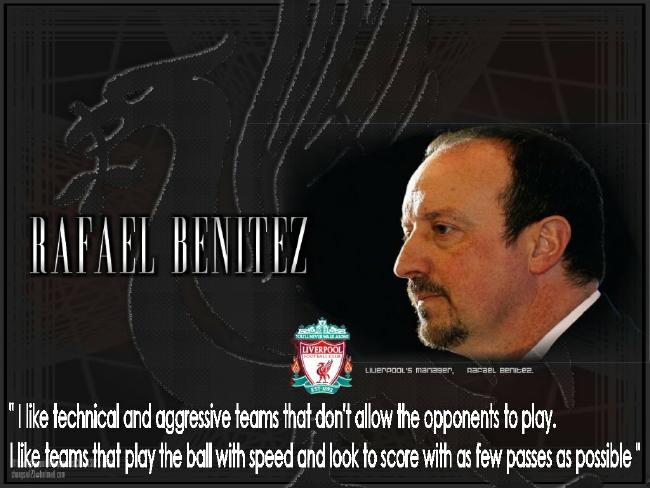
Rafa Benitez appeared irritated by the derision. “People just don’t know how good Lucas is. He is a fantastic player,” he said. “He can tackle, he can pass the ball and he can win in the air. He is still a very young player learning to live in a different country. It is not easy for him to get into the team, considering the quality of the opposition he has to face in that department at Anfield. He is competing against Javier Mascherano, the captain of Argentina and against one of the best players in the world, Steven Gerrard, who has also captained his country, and then there is Xabi Alonso, who is now a European champion for club and country.”

This is a key point; it isn’t obvious that Lucas can ever be in the same class as his (mostly former) midfield colleagues. He doesn’t possess the tenacity of Mascherano, the passing range of Alonso or the all-action style of Gerrard. His attributes are more subtle, making him easy to dismiss as a passenger.

Lesser players would have buckled under the abuse, yet Lucas knuckled down and improved his game. He bulked up so he could compete in challenges, he quickened his time on the ball even if that meant sacrificing some of the incisiveness, but the most important thing he did was earn the trust of his teammates. Early on in his Liverpool career, his colleagues didn’t read his passes or movement because they were used to a different type of player – now they have spent time playing with him we are seeing the best of him.

Although often derided as not being of “Liverpool quality”, Lucas is the epitome of the Liverpool player. Throughout their years at the top of Europe’s footballing pyramid, Liverpool built their game on an intelligent patient passing game. Bill Shankly claimed it was no use “running into no man’s land. If you get the ball in the Liverpool team, you want choices… you want at least two people to pass to, maybe three, maybe more… You might not be getting very far, but the pattern is changing. Finally, somebody will sneak in.” He also claimed it was important “that everyone can control a ball and do the basic things in football” and his training sessions would often consist of four boards set up in a square with a player stood in the middle, while balls were flung at them from each corner to trap or strike first-time.

Looking at Lucas, you would expect him to slot straight into a Shankly side. Like many holding midfielders, his first touch and close control is often immaculate (Next time you see him, look out for the way he traps the ball with his chest – beautiful stuff) and his passing is neat. The basis of pass and move is that the short passing in one area of the pitch will draw the opposition into this space, opening up space elsewhere, and Lucas is great at controlling the playing area. The sideways and backwards passing is often used as a criticism against him and Mascherano, but is a sign of how intelligent a player Lucas is – once space has opened up, he’s perfectly capable, again much like Mascherano, of making an incisive run or pass into it.

What’s more, when he knows he can’t make a run or a pass without putting himself or a teammate in danger, he’s excellent at drawing a foul – quickly shifting his body to shield the ball from his opponent. This shouldn’t be confused with diving – it’s the equivalent of whatFransesco Totti is so good at, but with the added force of the Premier League crashing into him.

It’s difficult to show off extended passing moves creating space in just a few pictures, but showing simply how Lucas taking time to make fairly simple passes shows it excellently:

Lucas receives the ball from a short throw-in

He takes longer than he needs to control and pass the ball, giving the opposition player (blue) time to close him down

Giving the ball away at the last moment opens up huge amount of space for Agger

And here he is attacking space himself:

A series of short passes in deep positions draws Lille's players forward, a short ball to Kuyt and there's suddenly a lot of space

Which Lucas runs into, using the space to engineer a good shot on goal

“The strength of British football lay in our challenge for the ball, but the continentals took that away from us by learning how to intercept,” Bob Paisley claimed and, again, Lucas shows the intelligence that would have won him a place in the great Liverpool sides. Slotted alongside the rabid Mascherano, Lucas’ focus off-the-ball was, like Alonso, on positioning to cover for his teammate’s more blood-and-thunder approach. This is the most unglorious style of dirty work, because most fans don’t realise you are even doing it. However, defensively, Lucas offers much more than Alonso; the Spaniard was positionally disciplined, but was much less mobile than Lucas, which is one of the reasons Benitez wanted to trade him for Gareth Barry. Lucas’ work rate and mobility means he can press too, particularly considering his improved strength and timing in the challenge, pushing towards the universality that Benitez wanted from his players.

Mascherano (green) pressing Lille player in possession with Gerrard

Lucas (blue) moves to the centre to cover Mascherano and intercepts the pass

Here is Lucas pressing while Mascherano covers

Lucas is fast becoming one of the best holding midfielders in the world and it can only be a matter of time before everyone stands up and takes notice rather continuing to scapegoat him for his team’s failings. The game against Chelsea was just the beginning.

Tuesday, November 9, 2010

Wednesday, March 4, 2009

What Lucas brings to the team. What Babel might bring

Posted by yorkykopite on January 1, 2009

Probably like a lot of us, when Lucas Leiva and Ryan Babel joined Liverpool I scanned websites of both Gremio and Ajax to see what the two sets of divested fans felt about losing their starlets to the Reds. 

The Gremio site was marked by fatalism, pride and a certain amount of anguish. But whatever the individual response to losing Lucas it was plain to see that the young lad commanded the complete confidence of his former club’s supporters. In fact it was clear they loved him. There were comparisons there between Lucas and Falcao, Lucas and Cerezo, even Lucas and Gerrard. Here, apparently, was a player of the authentic southern Brazilian style – a box-to-box midfielder who played football with the high technique we expect of players from that part of the world and the sense of urgent purpose that sometimes seems lacking. People talked about his one touch play, his imaginative running off the ball, his tireless desire to close down the opposition. They talked about his combativeness and his quick thinking. And they talked about how irreplaceable he would be and how they would miss him. No Red could scan those pages without experiencing a surge of joy (and because we are football romantics here at Anfield a tinge of pity for the Gremio lads too). This was a 19-year-old they were talking about! But probably most Reds reading those fantastic enconiums also felt a blast of disbelief that it was wind-swept Liverpool - not Real, not Barca, not Benfica, not Milan (sun-kissed, the lot of ‘em) - who were going to land the best young Brazilian to emerge since Kaka. 

The Ajax site was different. Babel divided opinion in Amsterdam. For every fan who talked up his staggering pace on the ball, there was a tired Dutch shrug at his erratic decision-making. For every supporter who mentioned his hammer shot there was another who bemoaned his shot selection and complained of his naivety. Maybe the idea of raw talent doesn’t impress in a country where even school footballers are expected to show something that’s been cooked. Or perhaps there’s simply more sour grapes at a prestigious club which is perennially and – for them - boringly stripped of its best young players. But even allowing for that there was a strata of genuine disbelief on the Ajax sites that Liverpool had thrown such a lot of money at such a misfiring talent.    

I liked both Lucas and Babel as soon as I saw them. I also liked the idea of them because both acquisitions seemed to signal that Rafa was thinking beyond the functional to the decorative. I don’t mean that in a bad sense. But compared to what we had at Anfield, and certainly to what we’d been used to under Houllier, both Lucas and Babel promised excitement and adventure and a readiness to take a huge punt on precocious talent. They indicated very strongly that we hoped soon to meet the best teams in Europe on level terms when it came to flair and technique. I still think that the two signings carried a colossal symbolic value which was every bit as important as the signing of Torres – and  something which probably wouldn’t have happened were it not for Istanbul. 

* * *

Eighteen months on, what are we to think? Well here’s a cautionary note. To ask that question even three weeks ago would have been to provoke an avalanche of derision at one of the young players. Lucas Leiva, we were told, was not Liverpool quality. He couldn’t pass, couldn’t tackle, couldn’t run and probably couldn’t piss without asking his mum first. He was a fraud, a waste of money, the worst Brazilian footballer of all time and he was, in fact, keeping far superior local talent out of the team. Against Fulham he was booed by the know-nothings and then his house was burgled. Jesus, you had to feel for him even if you didn’t rate him as a footballer. You also had to feel embarrassed that Anfield, which Lucas had honoured in several interviews to foreign journalists, had paraded such a public thumbs down to a solitary young player when no one in a Red shirt that day, not even the experienced players, seemed capable of lifting their game.    

Whoever had a private word with him at that point and said “please stick it out lad, you’re a great player, this is a great town, things will get better” deserves the Shankly Cross or whatever honorific we give to these local heroes. If that conversation took place it might end up ranking as one of the great turning points in Liverpool’s modern history. It’s possible of course that no one said anything out of the ordinary to Lucas. He might have just knuckled down, drawn on his own resolve and decided to come up fighting. Some young footballers have huge reserves of inner belief and ambition. That’s why they are where they are. This must be especially true of Lucas who showed the balls of a young Liverpool merchant seaman setting out on his maiden voyage by uprooting himself from home to come to a country where he understood no one and no one understood him. 

So what does he bring to the eleven? It’s obvious now of course. But there were clues from the first time he appeared in the Red. Lucas brings the traditional Liverpool qualities of pass and move to a team that is slowly re-learning something that used to be its birthright. Lucas knows that the best pass in football is usually the five yard pass, followed instantly by a move into space. Occasionally it’s necessary to throw something longer into the game, and Lucas can do this too, but his regulation pass is a five to ten-yard stab into the opposition’s ribcage. A couple of those in quick succession and it begins to fucking hurt. A couple more and the other lot are struggling for breath and space is opening up in nasty areas all over the pitch. And that’s what Lucas does. He asphyxiates them and fills us with thunderous air. I’m not a spiritual bloke but in these past few games I swear it’s been possible to squint at the field and see the ghost of young Ronnie Whelan on the lad’s shoulder.   

I also believe he was making these rapier passes and these ingenious runs from his very first game. For sure he sometimes appeared to lack the physique (or technique) to hold off physical challenges and make his neat collection of the ball really count. Probably no one in Brazil had ploughed into his shoulder with as much industrial force (and with the ref’s permission) as Michael Essien continually did at Stamford Bridge. But part of the problem was that no teammate was reading him, or they didn’t have true confidence in him, and much of his good running was being squandered. The story’s different now. There’s a swelling in both Lucas’s confidence and the esteem in which he’s clearly now regarded by Gerrard and the others. Players are starting to look for Lucas. And he really wants the ball. I hope, I pray, that he doesn’t become cloistered when he next treads the turf at Anfield. It would be a great thing if he could feel the Kop’s new confidence in him right from the start.     

But, jeez, did you see the way he was using his chest against Arsenal to control and take command of loose balls in crowded areas? Magnifico, no? Three or four times he did this and it was sublime. He looked lightning quick to seize on these loose balls but this was probably a trick of the eye because to Lucas the balls  weren’t there to be contested at all. In other words they weren’t ‘loose’. He’d anticipated the evolution of play perfectly, even when that evolution was full of accidents. This is top class football. It’s like Xabi Alonso – the same accelerated brain pattern, the same enhanced ability to compute movement, the same  intuition that defies rational analysis. The result was gorgeous. The normal player would have been involved in a series of 50-50 tackles to grab hold of the ball. Lucas was half a second quicker and already emerging from the pack with the ball falling off his chest into the empty space he was running into.  Yes, that’s football. 

I’d play Lucas with Alonso, Mascherano and Gerrard. All four of them in the same team – especially against the bus-parkers when it makes as much sense to go through them as around them. That quartet would mean ownership of the pitch as well as sufficient dynamism to capitalise on that ownership. It would help us turn the little pockets of space that exist between the lines of densely packed opponents into relative chasms. Remember Valencia? 

* * *

What about Ryan Babel then? Were those Ajax supporters right when they qualified their praise for the young Dutchman? 

Well so far he’s had a miserable season really, despite destroying Man United at Anfield and showing Olympique Marseilles (again) that wonderful combination of dainty feet and surging body strength. But the promise he showed at the back end of last season, when he was terrorising Arsenal and Chelsea, has not been translated into regular form or a regular slot. That’s been the biggest disappointment of our season to date. It has meant an extreme over-reliance on the far inferior, though arguably more dependable, qualities of Dirk Kuyt and has led to a crisis of confidence in Babel himself. Why, he must be asking himself, have I not got within sniffing distance of a regular slot in the team – especially with Torres unavailable for so long and especially with the boys shedding home points to such unfancied clubs as Stoke, Hull, Fulham and West Ham?  It’s worth reminding ourselves that Babel started none of those matches (notching up a paltry 39 minutes as a sub across all 4 games) and that Kuyt started all of them - and finished all but one. Such is the lack of confidence that Rafa has in Babel. 

Of course all was not rosy with Babel even when he was terrorising those Arsenal and Chelsea defences in last season’s Champions League matches.  His greatest moment last season – possibly Liverpool’s greatest moment - was when he came on in the quarters at Anfield and tore the heart out of Arsenal. Power, pace, trickery, and intelligence allied in one individual will always propel a team a long way towards victory and Babel, momentarily, combined all those elements in that game – and again, when he came on at Stamford Bridge in the semis. And yet, the lad had been wretched at the Emirates in the first leg when he’d found himself in the starting line up and suddenly bereft of the ability to trap a ball - and not much better when he’d started in the Anfield leg against Chelsea. 

Consequently a theory emerged last season that Babel was most effective coming into games as a sub when the opposition was tiring. The idea was that a sudden injection of a turbo-charged Babel was bound to be too much for a tiring opposition team that had been rope-a-doping for the best part of the game. I never believed that – and certainly don’t believe it this season when he’s been a relatively ineffective substitute. But I did think there was a bigger problem, which was psychological. At 0-0 in a virgin game Babel often seemed to be a bag of nerves, the first few touches hesitant at best, clumsy at worst. But as a sub coming on to a pitch in relative disarray (compared with the first minute of the game), often with a specific and ambitious objective (overturning an impending defeat) Babel looked primed and almost superciliously confident. It was as if once the rulebook was thrown away and there was no need for caution he was a liberated footballer. In other words he performed far better coming into a game that needed a dramatic solution rather than starting one where the emphasis was on not creating a self-inflicted problem.

This might explain why he has been relatively ineffective when he’s been used as a substitute against Stoke City, Fulham, West Ham, and Hull. In all of those games Liverpool had something to lose when he came on as well as something to win. Maybe it was only a measly point each time but it was possibly enough to intimidate Babel. And therefore what we got each time (which we didn’t get in the desperation of the Champions League) was the familiar Babel - a player who seems afraid to make mistakes. 

But is it Babel who is intimidated? Or is it his coach? Is it a temperament problem he has or is he simply burdened with too many defensive instructions? Does he respond better to the request to “cut the full back to ribbons lad” or “whatever else you do, make sure their full back doesn’t get beyond you with the ball”? We can only speculate. But many people will remember one of his first interviews with the media after joining the Reds in which he said that after several weeks coaching Rafa had never once mentioned what he should do with the ball. Everything had been about how to defend. Babel wasn’t complaining. Indeed he said he was learning valuable things. But, still, there was a tinge of amazement – the same sort of amazement, perhaps, that Quaresma apparently expressed when he declined a move to Liverpool because he didn’t want to turn into an auxiliary defender. 

Perhaps Babel will soon leave us. I'd be sad if he did because he would make a fine player somewhere else. He may even be a great one if he finds a coach willing to wager on his fragile genius and not be over-concerned about the natural lack of caution in his play. Ironically, his best chance of succeeding at Liverpool is if we find ourselves five or six points off the pace near the end of the season with absolutely nothing to be gained by cautious football. Chasing the leading pack you’d want Babel in the team. But, obviously I hope it doesn’t come to that. It’s a shame though because with the staggering amount of killing possession we are now getting thanks to Alonso we ought to be in a position to exploit Babel's gifts and make his incredible cameos against Arsenal, Chelsea and Man Utd a regular feature of our football. 

Popular Posts

Labels

188Bet (2) Alberto Aquilani (1) Andre Villas Boas (2) Andy Carroll (1) Aragones (1) Babel (1) Barcelona (1) Barnes (1) blogs (1) Brad Jones (1) Brendan Rodgers (2) Capello (2) Casillas (2) Cristiano Ronaldo (1) Dalglish (5) Dalla Valle (1) Daniel Agger (1) Del Bosque (2) Diego Maradona (2) Eto'o (1) Euro08 (1) Everton (1) Evra (1) Fergie (2) Fernando Torres (5) Fitness (1) Football tactics (46) Freak Goals (1) funny (2) Gaffs (1) Gary Lineker (1) Gerrard (4) Guardiola (3) Harry Redknapp (1) Herrera (1) Highlights (1) Hillsborough (2) Hodgson (3) Howard Webb (1) Jan Molby (2) Javier Mascherano (2) Joe Cole (1) John Aldridge (2) John Barnes (1) Jonjo Shelvey (1) Jordan Henderson (2) Jose Segura (1) Juan Mata (1) Just for a Laugh (1) Kenny Dalglish (7) Kolo Toure (1) Kuyt (3) LeBron James (1) Level 3 (2) Lionel Messi (3) Liverpool FC (1) Lucas (4) Lucas Leiva (2) Luis Enrique (1) Luis Suarez (9) Mancini (1) Martin Skrtel (2) Maxi Rodriguez (1) micha (1) Michael Owen (2) Michels (1) Mourinho (3) Owen (1) Pablo Aimar (1) Patrice Evra (1) Pennant (1) Pepe Reina (1) Philippe Coutinho (2) Pre-season (1) Rafa (46) Ralf Rangnick (1) Ramos (1) Reina (2) Rodolfo Borrell (1) Roy Hodgson (14) rumours (1) Sacchi (2) Sebastian Coates (1) Shankly (1) Skills Challenge (3) Squad size (1) Squad worth (1) Steven Gerrard (2) Stewart Downing (2) Tevez (1) Thierry Henry (1) Thommo (1) Tomkins (12) Torres (3) Transfers (4) TV Competitions (3) UK Academy system (1) Xabi Alonso (2) youngsters (4) Youtube Scout (7) Zonal Marking (2)

Quote of the moment

Defying belief however, is a market Benitez has cornered quite well. The moment you think Benitez is clueless, he defies it by pulling off a result of majesty, like the one achieved in Madrid. The moment he is hailed a genius, he masterminds toothless surrender to a team going nowhere. In the ongoing Anfield power struggle, just when he was cornered by the firing squad, the Spaniard's demise at Liverpool looking practically assured with the ominous suspension of betting by the bookmakers, he squeezes out through a narrow trapdoor and eliminates Rick Parry. Rafa Benitez is Keyzer Soze.
- Just Football blog: The Curious Beast that is Football 28 Feb 2009